Choosing the 2026 best Pedicure Pliers requires more than comparing prices or polished product photos. Global buyers need tools that perform consistently across salons, clinics, and home-care settings. Jaw alignment matters. So does the cutting edge.
A dependable pair should offer controlled pressure, comfortable handles, and corrosion-resistant stainless steel. The hinge should open smoothly without wobbling. A narrow jaw can reach thick or curved toenails, but excessive sharpness may increase handling risks. Buyer judgment remains essential. No tool replaces proper training.
Podiatrist Dr. Jacqueline Sutera has emphasized, “Never trade safe technique for convenience.” This principle should guide every product comparison. Look for clear material specifications, documented quality checks, and practical cleaning instructions. Suppliers should also explain packaging, batch consistency, and warranty support. These details often reveal more than impressive marketing claims.
For international purchasing teams, regional expectations can complicate selection. Handle sizes may suit one market but feel uncomfortable in another. Sterilization requirements and labeling practices may also differ. A strong evaluation should consider user experience, manufacturing transparency, and after-sales reliability. Samples deserve real testing, including repeated opening, cutting, cleaning, and storage.
There is no perfect model.
Some pliers excel with thick nails but feel heavy during long appointments. Others provide excellent control but lack sufficient leverage. This guide compares leading Pedicure Pliers for 2026 through a practical, evidence-aware lens. It also recognizes a limitation: product performance can change between batches. Careful buyers should verify current specifications before placing large international orders.
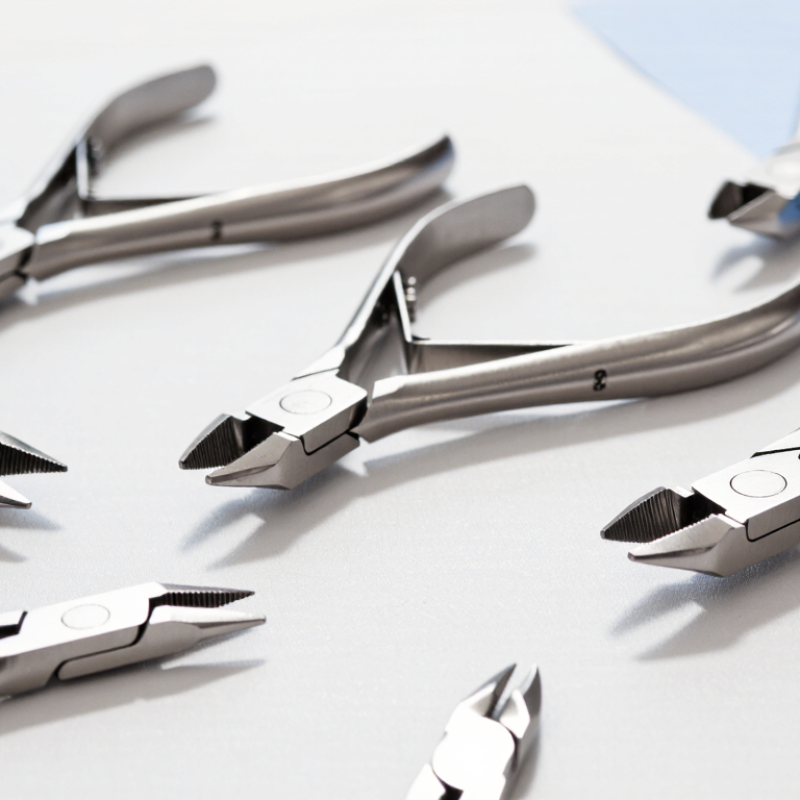
2026 Best Pedicure Pliers for Global Buyers
What Makes Pedicure Pliers “Best” for Global Buyers in 2026?
The best pedicure pliers begin with dependable cutting performance. Their jaws should meet evenly, without leaving a sharp metal ridge. A clean cut matters when working around thick toenails. It also reduces repeated pressure on the hand. During product checks, I look for smooth hinge movement and a spring that returns gently. Too much resistance becomes tiring quickly. Too little control feels unsafe.
Material choice matters across different climates. Corrosion-resistant stainless steel is practical for humid warehouses and frequent cleaning. However, a steel label alone proves very little. Global buyers should request material documentation, hardness information, and quality inspection records. Handles need a firm, comfortable grip, even with gloves. Small details matter here. Rough edges, loose joints, and uneven polishing can reveal weak production control.
A reliable supplier should provide consistent samples, protective packaging, and clear care instructions. Packaging must prevent jaw damage during long-distance shipping. Buyers should also check whether replacement springs or adjustment support are available. These details may seem minor until a shipment reaches a remote market. I have learned that attractive photos can hide poor alignment. Sample testing remains essential. No tool is perfect. Even strong pliers may feel unsuitable for every hand, so feedback from actual users should influence the final order.
| Evaluation Dimension | Recommended 2026 Benchmark | Why It Matters to Global Buyers | How to Verify Before Purchase | Priority |
|---|---|---|---|---|
| Intended Use |
Professional nail nippers Designed for controlled trimming of toenails rather than general-purpose cutting. |
A tool designed for nail work should provide better control and access than a generic cutter, especially for thick or curved toenails. | Check the product specification, jaw shape, cutting purpose, and whether the tool is intended for professional or personal use. | Essential |
| Material and Corrosion Resistance | Stainless steel construction; corrosion-resistant grades such as 420 or 440-series stainless steel are commonly used for cutting instruments. | Moisture, disinfectants, and repeated cleaning can cause staining or corrosion if the steel and surface finish are unsuitable. | Request the declared steel grade, material certificate, and resistance information for the intended cleaning and disinfection process. | Essential |
| Cutting Performance | Clean, progressive cutting action with aligned jaws and no visible gap when closed. | Proper alignment helps reduce crushing, splitting, and repeated cuts, which is important for thick toenails and professional workflows. | Inspect the closed-jaw alignment, perform a cutting test on an approved test material, and check the cut edge for crushing. | Essential |
| Jaw Geometry | Narrow, accurately ground jaws with a profile suitable for reaching the nail edge without excessive contact with surrounding skin. | Different foot shapes and nail conditions require access and visibility. A suitable jaw profile improves precision and control. | Compare jaw length, width, opening angle, tip shape, and photographs or samples from multiple viewing angles. | High |
| Handle Ergonomics | Smooth, comfortable handles with a controlled spring return and enough clearance for the user’s fingers. | Ergonomic operation can reduce hand fatigue during repeated professional use and helps users apply force more consistently. | Request dimensional drawings, grip photographs, spring-action samples, and a trial evaluation by intended users. | High |
| Hinge and Joint Quality | Smooth pivot movement with minimal lateral play, no grinding sensation, and stable jaw alignment throughout opening and closing. | A loose or rough joint can reduce cutting accuracy and may shorten service life. | Open and close the tool repeatedly, test for side-to-side movement, and inspect the pivot fastener and lubrication condition. | Essential |
| Surface Finish | Uniform polished, satin, or matte finish with no burrs, sharp unintended edges, pits, peeling coating, or visible rust. | A consistent finish improves cleanability, user comfort, and resistance to contamination retention. | Conduct visual inspection under bright light and check all contact areas, jaw interiors, hinge zones, and handle edges. | High |
| Cleaning and Disinfection Compatibility | Product instructions should clearly state compatible cleaning, disinfection, drying, and storage procedures. | Global professional users may follow different facility protocols. Unclear instructions increase the risk of material damage or inadequate reprocessing. | Request the official care instructions and confirm compatibility with the buyer’s approved disinfectant and sterilization process. | Essential |
| Packaging Protection | Protective individual packaging that prevents jaw damage, moisture exposure, and uncontrolled movement during transport. | Precision jaws can be damaged by impact or compression before the shipment reaches the buyer. | Review packaging drawings, drop-test or transport-test information, moisture protection, and sample packing quality. | High |
| Product Traceability | Lot or batch identification, inspection records, material documentation, and a defined quality-control process. | Traceability supports recalls, complaint handling, quality audits, and consistent replenishment across international orders. | Ask for a sample inspection report, lot-number format, certificate availability, and defect-handling procedure. | High |
| Regulatory and Market Documentation | Documentation matched to the destination market, product classification, and intended professional use; avoid assuming that one certificate fits every country. | Import, labeling, product-safety, and professional-use requirements can differ by jurisdiction. | Confirm requirements with the destination-country importer, customs broker, or competent authority before placing a bulk order. | Essential |
| Size and Configuration Options | Multiple jaw profiles, handle sizes, and spring configurations available where the target users have different hand sizes or nail conditions. | A single configuration may not suit every market, user group, or professional technique. | Compare the dimensional chart, working sample range, replacement-part availability, and user feedback from the target market. | Medium |
| Replacement and Maintenance Support | Clear maintenance guidance and access to compatible springs, pivot components, or service options where applicable. | Repairable or maintainable tools can reduce lifecycle cost and waste for professional buyers. | Request the spare-parts list, recommended lubrication method, service instructions, and expected support period. | Medium |
| Total Cost of Ownership | Evaluate purchase price together with freight, import charges, inspection, replacement rate, maintenance, and expected service life. | The lowest unit price may not be the lowest cost when defects, returns, corrosion, or frequent replacement are included. | Calculate landed cost per usable unit and compare sample results, defect allowance, warranty terms, and reorder consistency. | Essential |
| Sampling and Acceptance Criteria | Pre-production sample approval followed by written acceptance criteria for alignment, sharpness, finish, dimensions, packaging, and labeling. | Written criteria reduce disputes and help maintain consistent quality across repeat international shipments. | Approve a reference sample, define measurable tolerances, and use a documented inspection plan before mass production. | Essential |
A narrow, slightly curved blade can reach thick nail corners with less twisting. A flat blade cuts broad edges quickly. It may crush brittle nails. Geometry matters.
Close the pliers under bright light. The gap should disappear evenly from heel to tip. Poor alignment may leave a small ridge.
No. Soft steel loses sharpness quickly. Extremely hard steel may chip against hard nails or a metal tray. Balanced hardness is safer.
Request a tested hardness range and heat-treatment details. Ask for sample inspections and cutting tests. Vague sharpness claims are weak evidence.
Test repeated cuts, not only the first ten. Inspect burrs, pivot movement, and cutting consistency. A clean cut should feel controlled.
No. Nail thickness, humidity, and cleaning methods change performance. My first assumption was wrong. Long-term use reveals more.
The tool should support validated steam cycles at 121°C and 134°C, when instructions allow them. Exact exposure time depends on the sterilizer and load.
Request material specifications, corrosion testing, cycle validation, and written instructions. Test a small shipment first. Translated specifications can be incomplete.
Open the pliers fully. Brush the hinge under running water. Use a validated pouch without overcrowding. Inspect chemical indicators after each cycle.
Clean trapped debris promptly and dry the tool thoroughly. Check the hinge weekly. Stainless steel still needs careful maintenance. Appearance can mislead.
Choosing the best Pedicure Pliers for global buyers in 2026 requires more than comparing price and appearance. The ideal tool should be made from reliable 420 stainless steel, with approximately 12–14% chromium to support corrosion resistance and long-term durability. Cutting performance also depends on blade geometry, material hardness, alignment, and edge retention. A precise, smoothly operating blade can improve control, reduce hand fatigue, and deliver consistent results over repeated use.
Sterilization readiness is equally important for professional purchasing decisions. Buyers should confirm that the pliers can withstand standard autoclave cycles at both 121°C and 134°C without losing function or surface quality. A practical global purchasing checklist should include material documentation, production traceability, inspection procedures, and compatibility with relevant standards such as ASTM F899 and ISO 17664. By evaluating these factors together, distributors and professionals can select dependable Pedicure Pliers that support safety, performance, maintenance, and consistent quality across different markets.