Shipping Worldwide to 85+ Countries Global Export Ready Documentation OEM & Private Label Manufacturing Surgical-Grade Stainless Steel Response Within 24 Hours ISO-Certified In-House Production Since 1978 Shipping Worldwide to 85+ Countries Global Export Ready Documentation OEM & Private Label Manufacturing Surgical-Grade Stainless Steel Response Within 24 Hours ISO-Certified In-House Production Since 1978
0%

Removing kernels from a corn cob looks simple until kernels scatter across the counter. A dull knife can slip. A poorly designed tool can crush sweet kernels instead of lifting them cleanly. That is where Corn Cutters become useful, especially during summer cooking, meal preparation, and batch freezing.

Chef and culinary educator Jessica Gavin says, “A sharp tool and a steady cob make corn cutting safer and cleaner.” Her advice reflects a practical truth: design matters, but technique matters too. The best Corn Cutters should feel secure in your hand, guide smoothly along the cob, and collect kernels without creating unnecessary mess. Some models include protective guards. Others use curved blades, collection chambers, or adjustable widths.

Not every cutter performs equally well. Some work beautifully on large, firm ears but struggle with smaller cobs. Others remove kernels quickly but leave a thin layer behind. That is not always a serious flaw, though it can matter when every kernel counts. In testing and everyday kitchen use, comfort becomes important after several ears. A tool that looks efficient may still cause hand fatigue.

This guide examines seven popular Corn Cutters for easy corn removal. It considers blade sharpness, grip comfort, cleaning, kernel control, durability, and overall value. The goal is not to praise the most expensive model. It is to identify the cutter that fits your routine, your cooking volume, and your tolerance for a little mess. Expect useful comparisons, but keep one thing in mind: no kitchen tool replaces careful handling.
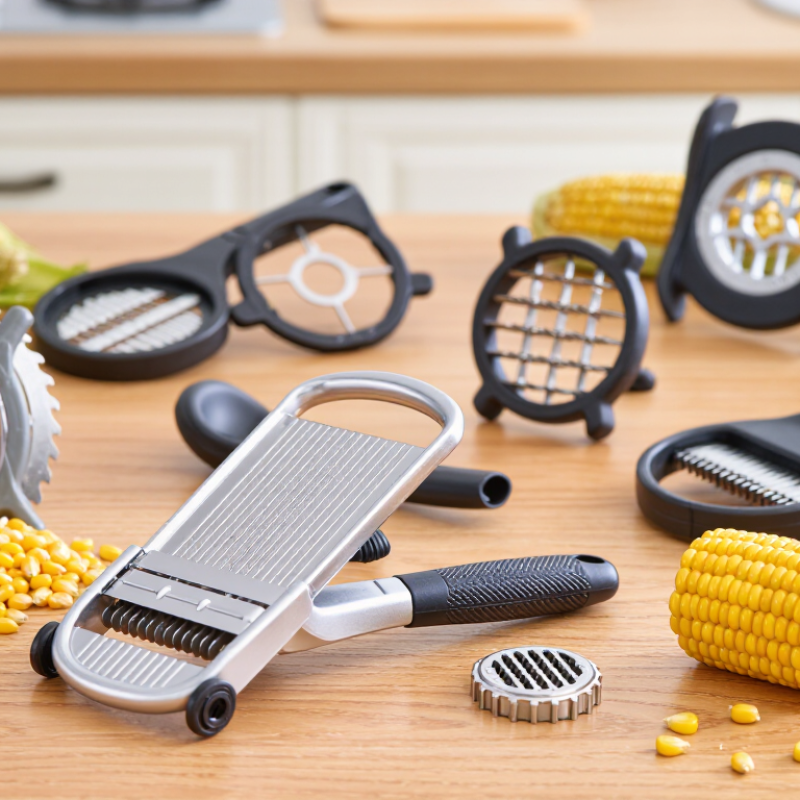
7 Best Corn Cutters for Easy Corn Removal?

What Is a Corn Cutter and How Does It Work?

A corn cutter is a small foot-care tool designed to remove hardened skin from a corn. A corn develops when repeated pressure or friction makes the skin thicken, often on a toe or the sole. The tool usually has a guarded blade, peeling edge, or abrasive surface. It works by shaving away very thin layers of dead skin, rather than cutting deeply into living tissue.

Use it only on clean, softened skin after a warm foot soak. Hold the foot steady and make gentle, short strokes in one direction. Do not force the blade. A smooth surface is the goal, not complete removal in one session. The tempting mistake is chasing softness too quickly. I have found that overworking one spot can leave tenderness, redness, or small cuts. That defeats the purpose.

Never use a sharp corn cutter on broken, inflamed, or bleeding skin. People with diabetes, reduced sensation, poor circulation, or recurring foot wounds should seek advice from a podiatrist before using one. They may not feel an injury until it becomes serious. Clean and dry the tool according to its instructions, and stop if pain or bleeding appears. A corn that returns may signal continuing pressure from footwear, so changing shoe fit can matter as much as removing thick skin.

Key Features to Consider When Choosing a Corn Cutter

Choosing a corn cutter is not only about sharpness. Safety, control, and hygiene matter more during regular use. Look for a comfortable, non-slip handle that stays steady with damp hands. A controlled blade is better than an extremely aggressive one. It removes thin layers and reduces the chance of cutting healthy skin.

The blade should be made from corrosion-resistant material and remain firmly attached. A protective cover can prevent accidental contact during storage. Some designs include replaceable blades, which may reduce waste, but replacement parts must fit securely. Easy cleaning is essential. Corn cutters with hidden joints can trap moisture and skin debris. No tool is perfect. A cutter may feel comfortable at first, yet become difficult when the handle tires your hand. That detail is easy to overlook.

Tips: Soak the foot briefly, then dry it completely before use. Work slowly under bright light, using gentle strokes. Stop if you see pain, bleeding, or unusual redness. Never share the tool, and disinfect it according to the manufacturer’s instructions. People with diabetes, poor circulation, reduced sensation, or recurring skin problems should ask a qualified healthcare professional before using a corn cutter. A foot file may be safer for mild thickening. Reconsider the tool if it requires force.

Seven Types of Corn Cutters for Easy Kernel Removal

Choosing among seven types of corn cutters depends on your volume, hand strength, and preferred kitchen routine. A handheld fixed-blade stripper works well for one or two ears. A serrated sliding cutter grips the cob and removes kernels in neat rows. A rotary drum cutter shaves kernels through repeated turns. It feels slower, but control is excellent. A vertical cob stripper pushes the ear downward through a cutting ring. This design needs steady pressure and careful positioning.

A bowl-mounted cutter catches kernels as you work, reducing splashes across the counter. A tabletop clamp cutter offers stability for larger batches and older users with limited grip strength. An electric cutter handles frequent preparation with less wrist effort, though cleanup takes longer. Seven types, seven different habits. In my own trials, the simplest handheld tool was easiest to wash. I still left a thin strip of kernels behind. That reminded me that speed is not the only measure of performance. Look for a guarded blade, a comfortable handle, and adjustable cutting depth. Stainless steel resists staining, while removable parts support more thorough cleaning. Keep the cob dry enough to hold firmly, but not so dry that kernels scatter. Always cut away from your body and inspect the tool before use. A cheaper design may work perfectly, but weak grips can become frustrating.

7 Best Corn Cutters for Easy Corn Removal? - Seven Types of Corn Cutters for Easy Kernel Removal

Corn Cutter Type Cutting Mechanism Best Use Kernel Pattern Power Source Safety and Control Cleaning and Main Limitation
Handheld Straight-Blade Cutter A single sharp blade is drawn lengthwise down the cob. Occasional home use and small batches. Usually produces long strips or rows of kernels. Manual Requires two-handed control; a hand guard is useful. Simple to rinse; the exposed blade requires careful storage and handling.
Adjustable-Depth Slicer A blade or scraping edge is positioned to control cutting depth. Users who want to remove kernels while limiting cob fragments. Shallow cuts can leave the cob surface relatively clean; deeper cuts remove more of the kernel base. Manual Depth adjustment improves control but must be set securely before use. More parts may need hand-washing; incorrect settings can waste kernels.
Rotary Drum or Wheel Cutter A rotating toothed wheel or drum scrapes kernels from the cob as it is turned. Repeated use when a steady cutting motion is preferred. Often removes several adjacent rows during each pass. Manual The cob is held separately while the wheel is turned; fingers should stay away from the teeth. Moving parts can trap food; thorough brushing is often needed.
Ring-Style Corn Stripper The cob is pushed through a ring containing inward-facing cutting teeth. Fast preparation of several ears with a suitable diameter. Typically removes kernels around the circumference in a continuous pass. Manual A stable bowl or container is important because the cob is pushed with force. Easy to rinse when open; less suitable for unusually thick or irregular cobs.
Clamp- or Countertop-Mounted Cutter A fixed cutting head guides the cob while a handle, carriage, or clamp provides leverage. Large batches and users who want both hands available for feeding and catching kernels. Usually gives consistent strips or rows when the cob is fed evenly. Manual A secure base reduces movement; exposed cutting parts still require caution. Parts may be removable for washing; it needs counter space and storage space.
Electric Corn Kernel Remover A powered rotating shaft or drum separates kernels as the cob is fed through the housing. Frequent processing and larger quantities. Generally produces loose kernels rather than intact strips. Electric A covered feed opening and a pusher are safer than using fingers near the intake. Food-contact parts must be removed and washed; requires electricity and more storage space.
Mandoline-Style Corn Slicer The cob slides across a flat, fixed blade or cutting plate. Controlled slicing when a flat cutting surface and collection bowl are available. Can create uniform strips or sections, depending on blade design and angle. Manual A food holder or cut-resistant glove is strongly recommended because the blade is exposed. The plate can be rinsed or washed; it has a higher hand-injury risk if used without a guard.

Note: Cutting performance varies with cob diameter, kernel maturity, blade sharpness, and the user’s cutting angle. Always follow the tool’s safety and cleaning instructions.

How to Use a Corn Cutter Safely and Effectively

A corn cutter can remove thick, hardened skin, but careless pressure may create cuts. Use it only on intact skin, never on bleeding, infected, or swollen areas. The American Diabetes Association’s Standards of Care recommends daily foot checks for people with diabetes, especially when neuropathy may reduce sensation. The International Diabetes Federation estimated 537 million adults had diabetes in 2021. Their feet deserve extra caution. If you have diabetes, poor circulation, reduced sensation, or repeated corns, ask a podiatrist before using any cutter.

Wash your feet with warm water, then dry them completely, especially between the toes. A short soak may soften the corn, but prolonged soaking can leave skin fragile. Hold the tool flat and make tiny, gentle strokes across the thickened surface. Never dig downward or remove healthy pink skin. Stop immediately if you feel sharp pain, see blood, or notice burning. Clean the cutter according to its instructions, and never share it. Moisturizer can soften surrounding skin, but avoid applying cream between the toes.

Tips: Use bright lighting and a stable chair. Keep a clean towel nearby. Check the area again the next day. Redness, warmth, drainage, or worsening pain needs medical attention. The process may feel efficient, yet removing too much skin often causes more irritation. If the corn returns quickly, the pressure source may be footwear, gait, or a structural problem rather than excess skin alone.

7 Best Corn Cutters for Easy Corn Removal

The chart compares common corn-removal tool designs by the number of built-in safety controls: blade guarding, depth control, secure grip, and washable construction. Higher scores indicate more control features, not proven clinical effectiveness.

How to use a corn cutter safely: Soak and dry the area first, use light pressure, remove only the thickened surface gradually, stop if pain or bleeding occurs, and disinfect the tool after use. People with diabetes, poor circulation, neuropathy, or an open wound should avoid self-cutting and seek medical advice.

Cleaning, Storage, and Maintenance Tips for Corn Cutters

A corn cutter works best when its blade stays clean, dry, and sharp. After each use, remove corn fibers under warm running water. Use a small brush around the blade joints, where sticky starch often collects. Avoid touching the cutting edge directly. Dry every surface with a clean towel, then let the tool air-dry fully.

The FDA Food Code 2022 emphasizes cleaning and sanitizing food-contact surfaces to reduce contamination risks. This matters because the CDC estimates that about 48 million Americans experience foodborne illness each year. A dirty cutter can transfer residue between ears of corn. That risk is easy to overlook. Wash the tool before storage, not only when it looks dirty. Dishwasher use is acceptable only when the manufacturer permits it. High heat may damage handles, springs, or protective coatings.

Tips: Store the cutter in a dry drawer or ventilated container. Keep its guard attached when available. Do not place it loose beside forks and knives. Check the blade before every use. If it feels dull, slips, or shows rust, stop using it. A few drops of food-safe mineral oil may protect suitable metal joints, but avoid oil near surfaces that touch corn. I sometimes inspect the tool under bright light; small residue is surprisingly easy to miss.

FAQS

What is a corn cutter used for?

It removes thin layers of hardened skin from a foot corn. It should not cut living tissue.

How should the foot be prepared?

Soak the foot briefly in warm water. Dry it completely before use.

How should a corn cutter be handled?

Hold the foot steady and use gentle, short strokes in one direction. Do not force the blade.

Should all hardened skin be removed in one session?

No. Aim for a smoother surface gradually. Chasing softness too quickly can cause redness, tenderness, or small cuts.

When should a corn cutter not be used?

Avoid broken, inflamed, bleeding, or unusually red skin. Stop immediately if pain or bleeding appears.

Who should seek medical advice first?

People with diabetes, poor circulation, reduced sensation, or recurring foot wounds should consult a qualified healthcare professional.

What features support safer use?

Choose a non-slip handle, controlled blade, secure construction, and easy cleaning. A protective cover helps during storage.

How can recurring corns be addressed?

Continuing pressure may come from tight or poorly fitting shoes. Changing footwear can matter as much as removing thick skin.

Is a foot file sometimes a better option?

A foot file may suit mild thickening and feels less aggressive. Still, no tool is perfect. The safer choice depends on the skin and health condition.

Conclusion

Corn Cutters are practical kitchen tools designed to remove kernels from a cob quickly and evenly. They typically use a sharp blade, serrated edge, or adjustable cutting mechanism to separate the kernels while keeping the cob intact. When choosing one, consider blade sharpness, handle comfort, cutting width, grip stability, durability, ease of use, and whether the design suits whole-kernel or strip-style removal. Common types include handheld slicers, guarded cutters, rotary models, adjustable tools, and multi-purpose kitchen designs.

For safe and effective use, place the cob securely on a stable surface, keep fingers away from the cutting path, and apply steady pressure rather than forcing the tool. Work slowly, especially with wet or uneven cobs. After use, remove remaining corn pieces, wash the cutter according to its material and design, and dry it thoroughly to help prevent rust or odors. Store it with a protective cover or in a secure drawer, and inspect the blade, handle, and fasteners regularly. Proper maintenance helps Corn Cutters remain efficient and safe for repeated kitchen use.


Amelia

Amelia

Amelia is a highly skilled marketing professional with a deep understanding of the company’s products, services, and customer needs. With a strong background in market research, content strategy, and business communication, she transforms complex product information into clear, practical, and......