China Best Barber Scissors Suppliers for Global Buyers
Choosing reliable Barber Scissors suppliers in China requires more than comparing factory prices. Global buyers must examine steel quality, edge consistency, handle design, production control, and after-sales support. A polished catalog can hide uneven tension, weak screws, or blades that lose sharpness after several services. Small details matter.
According to shear educator Ivan Zoot, “A shear is a tool, not a trophy.” This practical view helps buyers judge performance instead of appearance alone. Professional Barber Scissors should move smoothly, close cleanly, and feel balanced during repeated cutting. Their handles should reduce strain, while the blades should match the barber’s technique, from blunt cutting to texturizing.
Supplier experience also deserves close attention. Serious manufacturers can explain their steel grades, heat-treatment process, hardness range, sharpening method, and quality inspection steps. They should provide samples before large orders. Ask for tension tests, edge photographs, packaging details, and replacement-part policies. Verification takes time.
It is easy to overvalue low prices. That is a mistake. A cheaper pair may increase sharpening costs, customer complaints, and replacement work. However, premium pricing does not automatically prove superior craftsmanship. Buyers still need evidence.
A useful supplier comparison should include factory history, export experience, customization ability, minimum order quantity, delivery reliability, and communication speed. Certifications may support trust, but they cannot replace hands-on testing. Test the scissors on suitable hair, under realistic working conditions. Even experienced buyers sometimes overlook comfort after long use.
This guide examines China’s leading Barber Scissors suppliers for global buyers. It focuses on practical evidence, not exaggerated claims. Some findings may challenge common assumptions. That is worth considering.
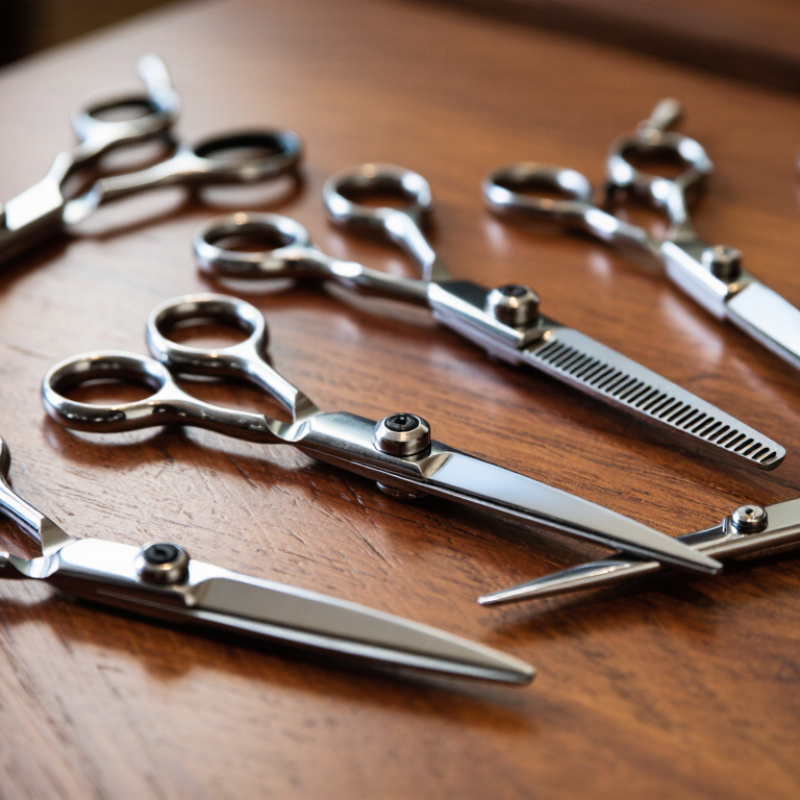
Chinese suppliers offer several barber scissor types for different cutting techniques. Straight scissors are the everyday choice for blunt cuts, trimming, and clean outlines. They usually range from 5.5 to 7 inches. Shorter blades can improve control around ears and necklines.
Offset scissors reduce wrist bending during repeated work. Many barbers prefer them for long sessions. Thinning scissors use fine teeth to soften heavy areas and blend transitions. Their tooth count affects the result. Fewer teeth remove more hair per cut, while higher counts create gentler texture. Chunker scissors have wider teeth and remove bulk quickly, but they require careful handling.
Some Chinese suppliers also produce curved scissors for shaping edges and special finishing work. Convex edges often provide smooth cutting, while beveled edges can feel more durable in demanding salon environments. Left-handed versions are available, but buyers should verify the actual blade orientation. A reversed handle is not a true left-handed design.
Material claims need practical checking. Ask for steel specifications, hardness data, hinge construction, and sample testing. A comfortable finger rest and balanced handle matter during eight-hour shifts. Packaging should protect the tips and tension screw. A polished surface can look impressive. It does not prove cutting quality. Experienced buyers should test dry and damp hair, check snagging, and review several production batches. Even good suppliers may show small differences between samples, so clear inspection standards are worth preparing.
| Scissor Type | Blade Design | Common Sizes | Typical Material Options | Main Professional Use | Key Characteristics | Common Customization Options |
|---|---|---|---|---|---|---|
| Straight Barber Scissors | Two straight, smooth-edged blades | 5.0–7.0 inches | Stainless steel or hardened Japanese-style stainless steel | Blunt cutting, precision trimming, outlining, and general haircutting | Produces a clean cut; suitable for controlled, accurate section work | Handle shape, finger rings, tension screw, polishing, laser marking, and packaging |
| Convex Edge Scissors | Highly polished convex blades with a smooth outer curve | 5.5–7.0 inches | Hardened stainless steel or cobalt-alloy stainless steel | Advanced haircutting, slide cutting, and precision techniques | Very sharp edge; requires careful maintenance and professional sharpening | Blade profile, hollow grinding, handle offset, screw system, and surface finish |
| Beveled Edge Scissors | Beveled cutting edges, often with micro-serrations | 5.0–7.0 inches | Stainless steel or ice-tempered stainless steel | General salon cutting, dry hair cutting, and basic barber work | Stable cutting performance and good grip on straight or slightly coarse hair | Tooth pattern, edge finish, handle color, tension system, and logo-free retail packaging |
| Thinning Scissors | One toothed blade and one solid blade | 5.5–7.0 inches | Stainless steel or hardened stainless steel | Reducing bulk, blending layers, and softening heavy lines | Available in different tooth counts to control the approximate removal rate | Tooth count, tooth shape, spacing, handle design, and tension screw |
| Texturizing Scissors | Toothed blades designed for stronger texturing effects | 5.5–7.0 inches | Hardened stainless steel or cobalt-alloy stainless steel | Creating texture, removing selected weight, and producing softer transitions | Tooth counts commonly range from approximately 20 to more than 40, depending on the design | Tooth configuration, cutting ratio, handle offset, finish, and protective case |
| Chunker Scissors | Wide-spaced, deep teeth with a larger cutting profile | 5.5–7.0 inches | Hardened stainless steel | Removing substantial weight and creating bold texture in thick hair | Removes more hair per closing action than standard texturizing scissors | Number and depth of teeth, cutting ratio, finger rest, and storage pouch |
| Swivel Handle Scissors | Straight, convex, or beveled blades with a rotating thumb ring | 5.5–7.0 inches | Stainless steel or hardened alloy stainless steel | Ergonomic salon cutting, repetitive professional use, and varied hand positions | Rotating thumb ring can support wrist positioning and reduce hand strain for some users | Swivel range, thumb-ring size, removable inserts, handle angle, and tension system |
| Left-Handed Scissors | Blade orientation and handle geometry designed for left-handed operation | 5.0–7.0 inches | Stainless steel or hardened stainless steel | Precision cutting for left-handed barbers and hairstylists | Designed to maintain the correct blade interaction when operated with the left hand | Blade style, handle offset, finger-ring size, tension screw, and protective packaging |
| Barber Razor Scissors | Short or medium-length blade with a fine, sharp edge | 4.5–6.0 inches | Stainless steel or hardened stainless steel | Detail work, beard shaping, fringe trimming, and small-area finishing | Compact profile improves control around facial hair, ears, and narrow sections | Blade length, handle style, finger rest, tension mechanism, and carrying case |
Specification note: Sizes, steel grades, tooth counts, finishes, packaging, and customization availability may vary by supplier and production batch. Buyers should request samples, cutting tests, material documentation, and inspection records before placing a bulk order.
Reliable Chinese scissor manufacturers show more than polished product photos. They provide measurable quality controls, traceable materials, and repeatable production records. The ISO Survey 2022 reported more than one million ISO 9001 certificates in China, showing broad quality-system adoption. Certification alone proves little. Buyers should verify the certificate, audit scope, and renewal status.
Professional barber scissors need consistent hardness, smooth tension, sharp convex edges, and corrosion resistance. A dependable factory should state the steel grade, heat-treatment range, blade tolerance, and inspection method. Ask for samples from different production batches. Check whether the blades close evenly without pulling hair. A small wobble can become a serious salon complaint. Reliable suppliers also record polishing, assembly, cleaning, and final inspection steps.
Trade Map data from the International Trade Centre places China among the leading exporters of scissors under HS code 8213. This export experience can support stable capacity and international packaging knowledge. Still, scale is not the same as craftsmanship. Request test reports, carton specifications, spare-part options, and documented lead times. Some factories respond quickly but provide vague answers. That is a warning sign. My own sourcing judgment would remain cautious when a supplier avoids factory videos, material evidence, or corrective-action records. Even a well-made sample may hide production variation, so pre-shipment inspection remains useful.
China Best Barber Scissors Suppliers for Global Buyers
How Global Buyers Can Evaluate Supplier Quality
A reliable supplier should prove performance, not simply display polished product photos. The ISO Survey 2022 recorded 1,265,216 ISO 9001 certificates worldwide, but certification alone cannot verify cutting quality. Request the certificate scope, issuing body, and recent audit date. Then inspect production samples under consistent lighting. Check edge alignment, screw smoothness, finger-ring comfort, and blade movement from heel to tip.
Ask for measurable material evidence. A supplier should identify the steel grade, hardness range, heat-treatment process, and corrosion testing method. Randomly select several samples from one production batch. Cut wet hair, dry hair, and thin paper, then examine pulling, folding, or uneven contact. A clean cut matters. So does repeated performance. Request batch records, inspection photos, and a corrective-action report when defects appear.
The U.S. Bureau of Labor Statistics projected 8% employment growth for barbers, hairstylists, and cosmetologists from 2022 to 2032. That growth increases pressure on tools used daily. Packaging also deserves attention. Scissors should arrive with protected tips, dry interiors, readable lot numbers, and clear care instructions. I once treated a low defect rate as proof of quality, which was too optimistic; a tiny sample can hide inconsistent batches. Independent pre-shipment inspection remains useful, especially when factory claims and delivered goods do not match.
China Best Barber Scissors Suppliers for Global Buyers
Choosing reliable barber scissors suppliers requires more than comparing prices. Experienced buyers request factory details, material specifications, and recent quality records. A useful sample should show clean edges, balanced handles, smooth tension adjustment, and consistent closing action. Test several pieces, not only one. A perfect first sample is uncommon.
Clear ordering details prevent expensive misunderstandings. Confirm steel grade, size, blade shape, screw system, handle design, polishing level, and packaging. Custom orders may include laser markings, color finishes, gift boxes, or private labels. Ask for a written specification sheet before production starts. Small changes can affect weight and cutting comfort. I have seen buyers approve attractive samples without checking long-term tension stability. That mistake deserves attention.
Export preparation also needs careful control. Suppliers should provide commercial invoices, packing lists, shipping marks, and applicable certificates. Verify the correct customs classification with your broker before shipment. Country-specific labeling and packaging rules may differ. Confirm carton strength, moisture protection, and spare-part arrangements for long-distance transport. Request an inspection report with measurements and photos before final payment. Production delays can happen, even with experienced suppliers. Build a realistic buffer instead of promising customers an exact arrival date. Clear communication, documented approvals, and traceable inspections make the sourcing process more dependable.
China Best Barber Scissors Suppliers for Global Buyers
Quality Control, Pricing, and After-Sales Support
Reliable suppliers treat quality control as a daily process, not a final promise. Experienced factories inspect blade alignment, edge sharpness, pivot tension, and handle comfort before packing. Some use hardness testing for stainless steel batches. Others check every pair under bright light. Ask for inspection records, sample measurements, and clear acceptance standards. A practical test is simple: the blades should close smoothly without pulling hair or creating rough sounds.
Pricing needs careful comparison. A low quotation may exclude polishing, custom packaging, spare parts, or shipping documents. Request a complete cost sheet before placing an order. Compare sample prices, minimum order quantities, production time, and payment terms. A supplier offering moderate prices may provide better long-term value. Still, price does not prove quality. I have seen attractive samples followed by uneven bulk production, so random inspections remain necessary.
After-sales support reveals a supplier’s real reliability. Confirm how they handle defective scissors, delayed shipments, and adjustment problems. A written warranty should explain replacement limits and response times. Useful support may include spare screws, adjustment tools, repair guidance, and video checks. Ask whether they can respond within two working days. Not every issue can be solved remotely. That limitation deserves honest discussion. Keep inspection photos, carton counts, and communication records. These details make disputes clearer and help suppliers correct repeated production mistakes.
Quality Control, Pricing, and After-Sales Support Benchmark
The chart compares non-brand supplier profiles commonly used by international buyers. Quality control and after-sales support are scored out of 100, while price competitiveness reflects relative value, with higher scores indicating better purchasing value.
Straight scissors suit blunt cuts, trimming, and clean outlines. Common sizes range from 5.5 to 7 inches. Shorter blades improve control near ears and necklines.
Offset handles reduce wrist bending during repeated cutting. They can feel more comfortable during eight-hour shifts. Fit still depends on hand size.
Thinning scissors soften heavy areas and blend transitions. Fewer teeth remove more hair, while higher counts create gentler texture. Chunker scissors remove bulk quickly. Handle them carefully.
Convex edges often provide smooth cutting. Beveled edges may feel more durable in demanding salon environments. Neither edge automatically proves better quality.
Request steel specifications, hardness data, hinge details, and sample tests. Check dry and damp hair for snagging. A polished surface proves little.
Confirm steel grade, size, blade shape, screw system, handle design, finish, and packaging. Ask for a written specification sheet. Small changes can alter weight and comfort.
Test several pieces, not just one. Check alignment, sharpness, pivot tension, closing action, and handle balance. Request photos, measurements, and an inspection report. One perfect sample can mislead.
Confirm invoices, packing lists, shipping marks, and applicable certificates. Check customs classification with a broker. Use strong cartons and moisture protection. Leave extra delivery time.
Request a complete cost sheet covering polishing, packaging, spare parts, documents, and shipping. Compare minimum quantities, sample costs, production time, and payment terms. Price is not proof.
Ask about defective items, delayed shipments, adjustment problems, warranty limits, and response times. Useful support may include spare screws, tools, and repair guidance. Not every issue can be solved remotely.
China has become a major sourcing destination for global buyers seeking high-quality Barber Scissors in different styles, including cutting, thinning, offset, straight-handle, and left-handed models. Reliable Chinese manufacturers typically offer precise blade alignment, durable stainless steel or premium alloy construction, comfortable ergonomic handles, adjustable tension systems, and smooth, low-friction performance. Buyers should evaluate suppliers by reviewing material specifications, production capabilities, sample quality, inspection procedures, certifications, customer feedback, and communication efficiency before placing a bulk order.
International purchasers should also confirm minimum order quantities, customization options, packaging requirements, labeling, lead times, payment terms, and export documentation. A dependable supplier should provide consistent quality control throughout production, transparent pricing, secure packaging, and responsive after-sales support for issues such as defects, replacements, or technical questions. By comparing several qualified manufacturers and clearly defining quality standards, global buyers can build stable supply relationships and obtain Barber Scissors that meet their target market’s performance, appearance, and budget expectations.