Choosing the best Corn Planes in China starts with a practical question: what does “best” mean for your fields? For most buyers, the term refers to corn planters or precision seeders. Their performance depends on soil conditions, planting speed, row spacing, seed-metering accuracy, and local service support. A machine that works well on a large, level farm may struggle in compact plots or uneven ground.
The market matters because China grows corn at enormous scale. The National Bureau of Statistics of China reported a record total grain harvest of 706.5 million tonnes in 2024. That figure covers all grains, not corn alone, but it shows the scale of the country’s agricultural machinery needs. The USDA Foreign Agricultural Service’s Production, Supply and Distribution database provides crop-specific estimates and is a useful source for comparing production trends. These reports describe the broader demand environment; they do not rank planter brands or verify machine quality.
Real-world checks matter. Inspect seed spacing in the field, ask for measured planting-depth consistency, and confirm that replacement parts are available nearby. Listen to the metering unit. Watch how the opener handles residue. Small details count. This guide compares Chinese Corn Planes by operating conditions, key specifications, and ownership considerations. Brand claims deserve scrutiny, and published data cannot replace a field trial. That is an important limitation, not a reason to skip the comparison.
What Are Corn Planes and How Are They Used in China?
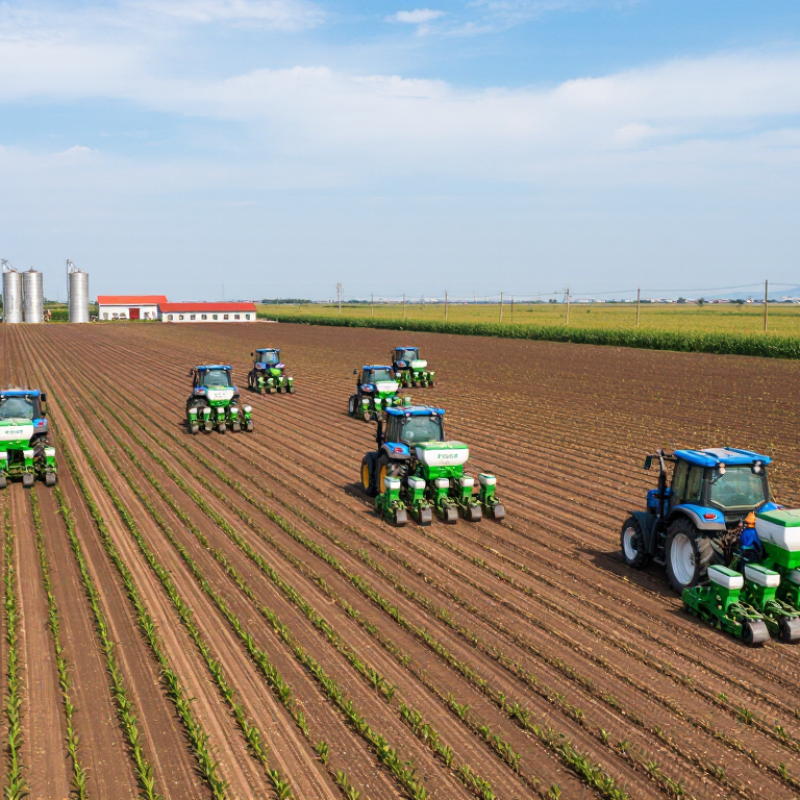
In this context, “corn planes” is best understood as corn planters: machines that place seed in rows at controlled spacing and depth. Many also apply fertilizer during planting. In China, farmers use them to establish maize across varied terrain, from large northern plains to smaller, uneven plots. A tractor-mounted planter opens a narrow furrow, drops seed, covers it, and presses the soil. The goal is even emergence, not simply faster work. Small adjustments matter.
The scale is substantial. The USDA Foreign Agricultural Service’s 2025 Production, Supply and Distribution estimates put China’s 2024/25 corn crop at about 295 million metric tons. China’s Ministry of Agriculture and Rural Affairs reported that overall crop cultivation and harvest mechanization reached roughly 74% in 2023; this figure covers multiple crops, not corn alone. On farms, planter choice depends on field size, soil moisture, residue, and available tractor power. Precision models can reduce seed waste, but poorly set row spacing or planting depth can create uneven stands. Dusty. Muddy. Never identical. Operators still need to check seed flow and emergence after planting; machine settings cannot correct every field condition.
Choosing a Corn Planter: Theoretical Working Width
Illustrative widths for common row configurations, calculated using 60 cm row spacing.
Corn planters place seed at regular intervals and may also apply fertilizer. A wider planter can cover more ground per pass, while the best row count depends on field size, terrain, tractor capacity, and transport needs. Actual working width may vary.
What Types of Corn Planes Are Available in China?
In China, corn planters range from simple hand-push units to tractor-mounted machines. Hand-push models suit small plots, garden-scale fields, and areas where larger equipment cannot turn easily. They place seeds in a furrow as the operator walks behind. Small plots need care. Row spacing and seed depth may vary if the ground is uneven.
For larger fields, farmers can choose two-row or multi-row planters pulled by a tractor. These save time across broad, level fields, but need enough turning space and a suitable tractor. No-till models cut through crop residue and disturb less soil, while conventional models work in prepared seedbeds. Some precision planters use air pressure to separate seeds and place them at more consistent intervals. That can help, though setup still matters. Check the crop row spacing, soil conditions, tractor power, and available service before choosing. Product descriptions do not always use the same labels, so compare working width and seed-metering method—not just the advertised type. Even a well-matched machine may need adjustment after a short field test.
Which Features Matter When Choosing a Corn Plane?
When choosing a corn plane in China, start with the crop and daily workload. A small hand-operated model suits home processing and sample checks. Farms need stronger equipment with steady feeding and adjustable working speed. I have found that capacity figures can be optimistic. Test real ears, not only empty demonstrations.
Blade material matters greatly. Hardened stainless steel resists moisture and keeps an even cutting edge. The blade should be removable for cleaning and replacement. Check the adjustment system carefully. A simple knob is often better than a complicated digital panel. It should handle different cob sizes without crushing kernels. Uneven cutting creates waste.
Look for a stable frame and sealed bearings. These details reduce vibration during long sessions. A wide feed opening helps prevent jams, especially with irregular ears. Guards should cover moving parts, while emergency stopping should be easy to reach. Dust control is also important in enclosed workshops. Ask for noise, power, and output tests under normal conditions. Certification documents and clear maintenance instructions add practical reliability. I once focused too much on output speed and overlooked cleaning time. That mistake made the machine less useful than expected. A washable contact surface may matter more than a higher hourly rating. Test the plane with your own corn before ordering.
How Do Leading Corn Plane Options Compare?
What Are the Best Corn Planes in China?
How Do Leading Corn Plane Options Compare?
Corn planters in China differ most in metering accuracy, row spacing, and performance in uneven fields. A simple mechanical-meter planter can suit small plots and lower budgets. Vacuum and electric-drive models offer more control over seed spacing and planting rates, but need careful setup and reliable power. More features do not always mean better results. On compacted or residue-heavy ground, opener design and downforce may matter more than the display.
China’s Ministry of Agriculture and Rural Affairs reported that the country’s comprehensive mechanization rate for crop production reached 73.5% in 2023. That figure signals a mature machinery market, but it does not rank individual planters or guarantee field performance. Compare options using measured skips and doubles, seed-depth consistency, and hectares covered per hour. The ASABE standard for planter testing, S658, provides a recognized framework for evaluating seed-meter performance. Ask for test results with the seed size and operating speed you actually use. Small details count: a blocked tube can undo a precise meter. And field checks are still necessary. A weakness in published comparisons is that soil moisture and residue conditions are not always reported, so treat headline accuracy figures cautiously.
What Are the Best Corn Planes in China? — How Do Leading Corn Plane Options Compare?
| Plane Type |
Typical Blade Width |
Best For |
Main Advantage |
Key Consideration |
Typical Use in China |
| Block plane |
About 30–40 mm |
End grain, short edges, and small adjustments |
Compact and easy to control with one hand |
Short sole may be less stable on long surfaces |
Furniture making, cabinetry, and general workshop work |
| Smoothing plane |
About 45–60 mm |
Final surface finishing on boards and panels |
Produces a fine finish when the blade is sharp and properly set |
Requires careful setup and a flat sole for consistent results |
Fine woodworking and furniture finishing |
| Jack plane |
About 50–60 mm |
General stock removal and preparing rough timber |
Versatile length and blade setting suit a range of tasks |
May need separate setup for roughing and finishing |
Small workshops and on-site carpentry |
| Jointer plane |
About 55–65 mm |
Straightening long edges and flattening broad surfaces |
Long sole helps bridge dips and maintain a straight reference |
Longer body is heavier and needs more storage space |
Panel preparation, door work, and larger furniture projects |
| Rabbet plane |
Varies by model; commonly about 20–40 mm |
Cutting or refining rebates and shoulders |
Designed to work close to corners and along a rebate |
Check blade access and adjustment range for the intended joint |
Joinery, cabinet construction, and frame making |
| Spokeshave |
About 30–50 mm |
Shaping curved edges, handles, and rounded components |
Short cutting action provides control on curved work |
Performance depends on matching the tool to the curve and grain |
Chair making, tool handles, and curved furniture parts |
How Can Buyers Find and Evaluate Corn Planes in China?
What Are the Best Corn Planes in China?
How Can Buyers Find and Evaluate Corn Planes in China?
Buyers searching for corn planes should compare corn planters by field conditions, not price alone. China’s National Bureau of Statistics reported 2024 corn output of about 294.9 million tonnes. That scale points to varied soils, farm sizes, and planting schedules. A machine suited to a large, level field may struggle on compacted or uneven ground. Ask suppliers for the recommended row spacing, planting depth, working speed, and compatible tractor power. Then compare those figures with your own field measurements.
Inspect a working machine where possible. Check seed-metering consistency, opener wear, frame welds, and access to routine service parts. Request a field demonstration using the seed type you plan to plant; count missed and doubled seeds across several rows. The USDA Foreign Agricultural Service’s crop reports provide useful context on China’s corn production, but they do not verify individual machine performance. Treat supplier claims as claims until tested. A small detail matters: can an operator clear a blockage without special tools? It sounds minor. It may not be. Keep written records of test conditions and results; muddy ground can distort a comparison, and one demonstration is never perfect.
Conclusion
Corn Planes are specialized agricultural tools or small machines used to process corn, typically by removing kernels from cobs, shaping them, or preparing them for storage and further use. In China, buyers may find manual models for small farms, electric units for workshops, and larger automated systems for commercial processing. Each type offers different levels of capacity, labor efficiency, portability, and power consumption, so the best option depends on the crop volume, working environment, and available electricity.
When choosing Corn Planes, important features include cutting or processing precision, durable materials, adjustable settings, safety protection, easy cleaning, and access to replacement parts. Buyers should compare output capacity, operating costs, noise, maintenance requirements, and overall build quality rather than focusing only on the purchase price. To evaluate suppliers in China, they can review technical specifications, request product demonstrations, inspect sample units, confirm customization options, and discuss shipping, installation, and after-sales support before making a decision.