Choosing the right pair raises a practical question: What Are the Best Professional Tweezers from China? The answer depends on tip precision, steel quality, surface finish, and intended use. China has many established manufacturers, but quality varies between factories and product lines. A professional-grade tweezer should close evenly, hold alignment, and maintain grip after repeated cleaning. Small details matter. The tips should meet without a visible gap.
This guide examines Professional Tweezers through a buyer’s perspective. It considers stainless steel grades, anti-magnetic performance, ergonomic tension, and corrosion resistance. Fine-point models suit lash work, electronics, laboratory handling, and intricate assembly. Flat or angled tips provide better control for broader materials. Reliable suppliers should offer samples, dimensional checks, material information, and documented quality-control procedures. Certifications can support credibility, but they never replace hands-on inspection.
A polished catalog is not proof. Practical testing remains essential. Check the tweezer under bright light, then test its grip on a thin fiber or small component. The action should feel controlled rather than springy or harsh. Packaging also deserves attention, especially when sterile or dust-sensitive applications are involved. No shortlist is perfect. A manufacturer may produce excellent precision tools but weaker packaging, inconsistent branding, or limited customization. Careful comparison exposes these weaknesses and helps buyers select Professional Tweezers that match real working conditions, budget, and long-term reliability.
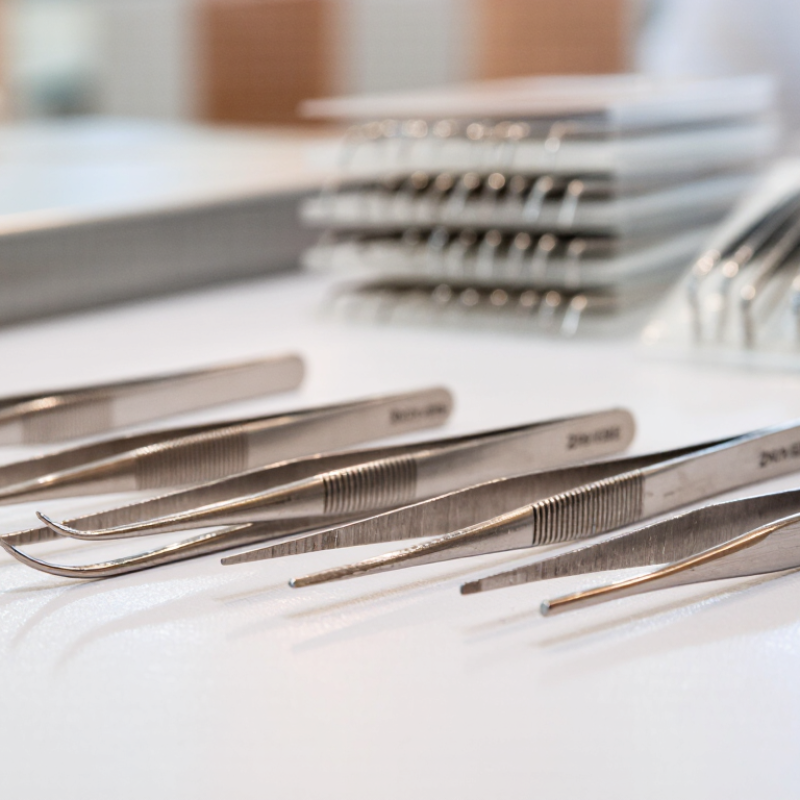
Professional tweezers are precision hand tools designed to grip, separate, or place very small objects. Their narrow tips provide control where fingers cannot. In beauty work, they help shape brows and place individual lashes. In laboratories or electronics assembly, they handle delicate components without excessive pressure. Their role is not simply to “pick things up.” They protect accuracy, comfort, and the surrounding material.
When evaluating professional tweezers from China, inspect the details rather than relying on appearance. Stainless steel should resist corrosion and remain easy to sanitize. The tips should meet evenly, without a visible gap or sharp offset. Spring tension also matters. Too much resistance can cause hand fatigue during repeated work. A smooth interior finish prevents snagging, while a textured grip helps when wearing gloves. Small differences matter.
I have found that practical testing reveals more than a product description. Hold the tweezers for several minutes, then grasp a fine thread or a tiny paper fiber. The tips should close cleanly and reopen without wobbling. No tool is perfect. Some finely aligned tips may feel less comfortable in larger hands. That trade-off deserves attention. Reliable suppliers should provide material information, dimensional tolerances, inspection records, and consistent samples before bulk purchasing. A careful buyer should test several pieces, because one excellent sample cannot prove stable production quality.
High-quality Chinese tweezers begin with accurate tip alignment. When the tips meet evenly, they can grip a fine hair, thread, or tiny component without excessive pressure. Stainless steel construction helps resist rust and repeated cleaning. A smooth surface also prevents uncomfortable edges from catching skin or fabric.
In practical testing, I check the hinge tension, tip closure, and handle balance. Good tweezers should open smoothly, then return without wobbling. I once chose a beautifully polished pair that felt impressive at first. After several uses, its tips shifted slightly. That experience reminded me that appearance cannot replace tolerance testing. Professional suppliers should provide material details, sample inspections, and consistent production records.
Tips: Hold the tweezers under bright light. Check for gaps between the tips. Test grip on a single thread. Avoid handles that feel slippery. Ask for cleaning guidance and replacement samples before ordering. A small flaw can become tiring during long work. Also, do not assume a higher price guarantees better accuracy. Temperature, finishing quality, and assembly control may matter more.
What Are the Best Professional Tweezers from China?
Professional tweezers are defined by tip control, alignment, and material stability. Their shape should match the task, not merely the price.
Slant-tip tweezers suit eyebrow shaping and general cosmetic work. Their angled edges grip short hairs with less wrist movement. Pointed-tip tweezers target splinters, fine wires, and precise craft assembly. Use them carefully; excessive pressure can damage skin or delicate parts. Flat-tip tweezers handle larger objects, labels, and small components without sharp-point contact. Curved-tip models improve visibility inside narrow spaces. Cross-lock tweezers hold parts continuously, which helps during soldering, laboratory preparation, or prolonged placement.
According to Fortune Business Insights, the global hand tools market was valued at about 23.5 billion dollars in 2023. Precision tweezers occupy a small but technically demanding segment. China’s manufacturing advantage comes from varied steel processing, CNC finishing, and scalable inspection. Look for stainless steel grades such as 304 or 316, smooth passivation, and tips that meet evenly under light pressure. Anti-magnetic versions are useful around sensitive electronic components. For professional cosmetic or laboratory work, request material certificates, tip-alignment records, and corrosion testing. These documents matter more than polished packaging.
One weakness remains. Catalog descriptions often overstate precision. I would test ten pieces from one batch, not trust one sample. A slight tip mismatch becomes obvious under magnification. Experienced buyers should also check hinge tension, surface burrs, and repeated-grip fatigue before approving a supplier.
What Are the Best Professional Tweezers from China?
Choosing professional tweezers from China requires more than checking price or polished appearance. I test tip alignment under a bright lamp before judging any pair. The tips should meet evenly, without a visible gap or sideways twist. Stainless steel offers corrosion resistance, while anti-magnetic alloys suit delicate electronic work. Ask for the exact material grade, hardness range, and surface treatment.
Different professions need different behavior. A laboratory technician may prefer fine, pointed tips for handling membranes or small samples. An electronics worker often needs smooth, anti-magnetic tips with controlled spring tension. Beauty professionals usually value comfort, grip, and accurate removal without sharp burrs. Watch repairers need narrow tips that close gently around tiny components. Try the tool for several minutes. Hand fatigue appears quickly.
Supplier reliability matters as much as the tweezer design. Request inspection records, production samples, and batch traceability. Check whether the tips remain aligned after repeated opening and closing. I once rejected a visually attractive pair because its tips shifted after light pressure. That result was disappointing. It also showed why photographs are insufficient. Packaging should protect the points from impact and moisture. Ask about cleaning compatibility, especially when tools face solvents or repeated professional sanitation. Small flaws matter. A rough inner edge can damage a sample, scratch a component, or reduce control during detailed work.
| Professional Application | Recommended Tip Design | Common Material | Typical Length | Key Performance Requirement | Typical Precision Level | Recommended Surface Finish | Cleaning and Sterilization Considerations | Typical Wholesale Price Range | Important Quality Checks |
|---|---|---|---|---|---|---|---|---|---|
| Electronics and Micro-Assembly | Ultra-fine pointed or angled tip with precise tip alignment | Anti-magnetic stainless steel, commonly equivalent to 304 or 316 grades | 115–125 mm | Stable handling of miniature components without scratching circuit boards | Very high | Fine satin or anti-glare finish | Clean with electronics-safe solvents; avoid residue from lubricants and polishing compounds | Approximately US$1.50–$8.00 per piece, depending on tolerance and packaging | Check tip closure under backlighting, magnetic response, burrs, symmetry, and spring consistency |
| Watchmaking and Jewelry Repair | Fine pointed, curved, or flat tip with a narrow working profile | Hardened stainless steel or anti-magnetic steel | 105–120 mm | Controlled force and smooth movement around delicate metal surfaces and small parts | Very high | Polished working tips with a satin handle | Use a lint-free wipe and suitable metal-safe cleaner; dry thoroughly to prevent corrosion | Approximately US$3.00–$15.00 per piece | Inspect tip parallelism, surface polish, closing pressure, corrosion resistance, and dimensional accuracy |
| Medical and Laboratory Handling | Blunt, serrated, or atraumatic tip depending on the specimen or procedure | Medical-grade stainless steel, usually 304 or 316 stainless steel | 120–160 mm | Corrosion resistance, reliable grip, cleanability, and traceable production control | High | Electropolished or smooth satin finish | Confirm compatibility with autoclave, chemical disinfection, and ultrasonic cleaning before purchase | Approximately US$4.00–$25.00 per piece | Request material certificates, cleaning instructions, batch traceability, tip alignment, and sterilization validation |
| Beauty and Eyelash Extension | Fine L-shaped, boot-shaped, or curved tip for isolated lash placement | Stainless steel, often with a lightweight ergonomic handle | 105–130 mm | Low hand fatigue, accurate isolation, and a smooth grip that does not snag lashes | High | Satin, matte, or colored coating with smooth contact surfaces | Disinfect according to the coating supplier’s instructions; inspect coated tips for peeling | Approximately US$1.00–$7.00 per piece | Test tension, tip contact, coating adhesion, balance, edge smoothness, and repeated opening cycles |
| Dental and Orthodontic Work | Angled, curved, or serrated tip designed for small components and clinical access | Corrosion-resistant stainless steel | 120–150 mm | Firm grip, resistance to repeated disinfection, and access in confined working areas | High | Non-reflective satin or electropolished finish | Verify compatibility with autoclave cycles and disinfectants used in the clinic | Approximately US$4.00–$18.00 per piece | Check serration uniformity, joint smoothness, corrosion resistance, sterilization durability, and labeling |
| Microbiology and Sample Preparation | Fine pointed or flat tip with optional serration for secure sample handling | Stainless steel; anti-magnetic options are useful near sensitive instruments | 115–150 mm | Clean transfer of small samples while minimizing contamination and specimen damage | High | Smooth satin or electropolished surface | Choose a design with minimal crevices; confirm compatibility with autoclaving and laboratory disinfectants | Approximately US$2.00–$12.00 per piece | Evaluate cleanliness, residual particles, tip geometry, corrosion resistance, and packaging integrity |
| PCB Rework and Soldering | Angled, flat, or fine pointed tip with heat-resistant handling properties | Anti-magnetic stainless steel or heat-resistant stainless steel | 115–130 mm | Precise component positioning and reliable performance near moderate heat | High | Matte or satin finish to reduce reflected task lighting | Remove flux residues promptly; avoid exposing plastic-coated handles to excessive heat | Approximately US$1.50–$9.00 per piece | Test tip hardness, alignment, oxidation resistance, insulation around the handle, and heat-cycle stability |
| Model Making and Hobby Assembly | Fine pointed, flat, or angled tip selected according to part size | Stainless steel or nickel-plated carbon steel for basic applications | 100–125 mm | Comfortable control, adequate spring action, and clean handling of small plastic or metal parts | Medium to high | Polished or satin finish | Wipe clean after use and keep dry; carbon steel versions require more corrosion protection | Approximately US$0.80–$5.00 per piece | Check tip sharpness, spring fatigue, burrs, plating quality, and grip consistency |
| Precision Packaging and Sorting | Broad flat or rounded tip to reduce pressure marks on delicate items | Stainless steel or coated stainless steel | 120–150 mm | Consistent grip, long service life, and comfortable repetitive operation | Medium to high | Matte, satin, or protective coating | Use routine wiping and approved disinfectants where required; avoid abrasive cleaning | Approximately US$1.00–$6.00 per piece | Assess handle ergonomics, closing force, tip flatness, coating durability, and fatigue after repeated use |
Price ranges are indicative wholesale estimates for standard professional models and can vary with material grade, tip tolerance, surface treatment, packaging, testing, order volume, and customization. Always request production samples and quality documentation before placing a large order.
The best professional tweezers from China should have aligned tips, firm tension, and corrosion-resistant steel. Care matters as much as the initial finish. In daily use, I inspect the tips under bright light before every service. Tiny bends can pinch skin or damage delicate fibers. It happens. I once overlooked residue near a hinge and had to discard the tool.
Clean tweezers immediately after use. Wipe away oils, adhesive, and debris with a compatible detergent. Rinse thoroughly, then dry every surface, especially the joint. Moisture invites corrosion. The CDC explains that cleaning must come before disinfection or sterilization because organic material can reduce effectiveness. For reusable instruments, follow the maker’s processing instructions and the principles of ISO 17664-1:2021. Never assume a household chemical is safe for steel or skin.
Use separate tools for different services. Store them in a closed, dry case instead of a loose drawer. Do not drop them tip-first. A protective cap helps, but it cannot correct poor handling. WHO’s 2022 global infection prevention report estimated healthcare-associated infections affect about 7% of acute-care patients in high-income countries and 15% in low- and middle-income countries. Tweezers are only one small risk, yet small tools still deserve disciplined hygiene. Record cleaning dates when several technicians share equipment. Review that system regularly. It may look excessive, but missed steps are difficult to detect.
Professional tweezers should be selected for precise tip alignment, corrosion resistance, secure handling, easy cleaning, and comfortable long-term use. The chart below presents a practical 100-point evaluation model for comparing professional tweezer features without using company or brand data.
Care and safe-use guidance: Inspect the tips before every use, clean the tweezers after each use, disinfect them according to the applicable hygiene procedure, dry them completely, and remove any tool with bent, chipped, rusty, or misaligned tips from service.
They grip, separate, or place very small objects. Their narrow tips offer control where fingers cannot. They support brow shaping, lash placement, laboratory handling, and electronics assembly.
Slant tips suit short hairs and general cosmetic work. Pointed tips handle fine wires, splinters, and detailed craft tasks. Flat tips hold labels or larger components without sharp contact. Curved tips improve visibility in narrow spaces. Cross-lock models hold parts without constant squeezing.
Corrosion-resistant stainless steel is a practical choice. Common grades include 304 and 316. Smooth passivation improves cleaning and surface stability. Anti-magnetic versions help near sensitive electronic parts. Packaging proves little.
Hold the tool under bright light. Close the tips gently and check for gaps or offsets. Then grip a fine thread or tiny paper fiber. The tips should close cleanly and reopen without wobbling. Test several pieces.
Tension should feel firm but not exhausting. Excessive resistance can fatigue the hand during repeated work. Test the tweezers for several minutes. Larger hands may prefer a different balance. Comfort is easy to overlook.
Request material information, dimensional tolerances, inspection records, and consistent samples. Ask for corrosion-testing details when hygiene matters. Test multiple pieces from one batch. One excellent sample proves very little.
Wipe away oils, adhesive, and debris immediately after use. Use a compatible detergent, rinse thoroughly, and dry the joint. Cleaning must happen before disinfection or sterilization. Follow the tool’s processing instructions. Keep them dry.
Store them in a closed, dry case. Avoid loose drawers and tip-first drops. A protective cap can reduce damage, but careful handling still matters. Use separate tools for different services. Record cleaning dates when several technicians share equipment. Review the system regularly.
Professional Tweezers are precision tools designed for tasks that require accuracy, control, and gentle handling. High-quality Chinese tweezers are valued for their balanced design, smooth gripping action, durable construction, and carefully aligned tips. Depending on the task, different types may be used, including pointed tweezers for detail work, flat-tip tweezers for secure handling, angled tweezers for improved visibility, and curved styles for specialized applications. Their performance can vary according to material, tip precision, spring tension, surface finish, and ergonomic comfort.
When evaluating Chinese tweezers for beauty, electronics, laboratory, craft, or industrial work, users should match the tweezer type and specifications to the job’s level of precision and sensitivity. Reliable tools should close evenly, hold objects firmly without excessive pressure, and resist corrosion or deformation. Proper care includes cleaning after use, storing tweezers in a dry protective case, avoiding unnecessary force, and checking the tips regularly. Safe handling and routine maintenance help extend service life while supporting consistent, accurate results.