Forged from surgical stainless steel and medical-grade polymers, designed for micro-dissection, electro-surgery, dental orthodontics, and tissue dressing.
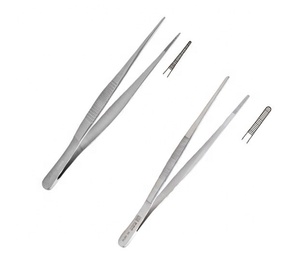
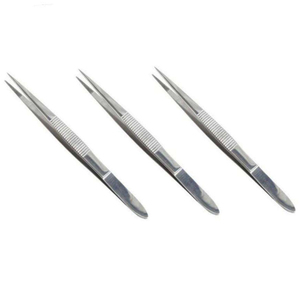
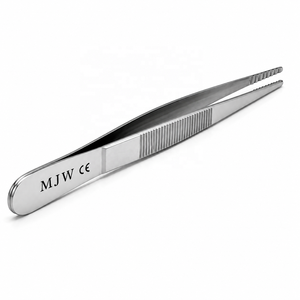
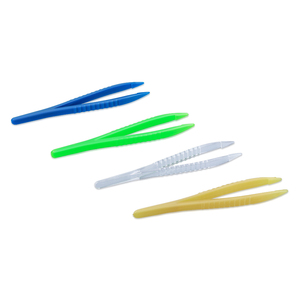
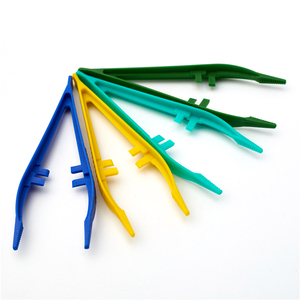
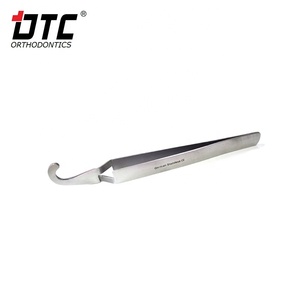
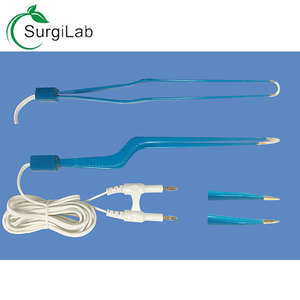
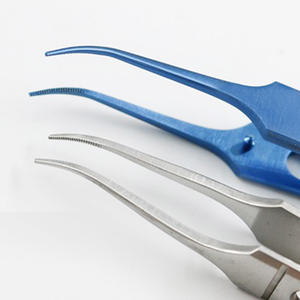
In modern clinical, surgical, and electrosurgical procedures, the structural integrity and tactile response of medical tweezers are directly determined by raw material selection, grain boundary consistency, and precise heat-treatment protocols. As a leading medical instruments manufacturer, our facility adheres strictly to international biomaterial standards, ensuring zero yield deformation during repetitive autoclaving and rigorous surgical stress.
Information Gain Benchmark: Medical forceps tip alignment tolerances must not exceed ±0.02mm under a 3.5N pinching load. Inferior alloys exhibit micro-flexing, causing tissue slippage during arterial ligation or delicate microsurgery.
We utilize three core metallurgical families engineered for specific surgical environments:
| Material Grade | Composition & Hardness | Corrosion Resistance | Primary Clinical Application |
|---|---|---|---|
| AISI 316L (UNS S31603) | Austenitic Steel, Mo 2.0-3.0%, HRC 25-30 | Superior pitting resistance in saline & organic fluids | General surgical dressing, tissue grasping, emergency room use |
| AISI 420J2 (UNS S42000) | Martensitic Steel, Cr 12.0-14.0%, HRC 48-52 | High hardness post-quenching, excellent wear edge retention | Micro-splinter forceps, sharp fine-pointed forceps, ophthalmic instruments |
| Titanium Ti-6Al-4V Grade 5 | Alpha-Beta Alloy, 6% Al, 4% V, Non-magnetic | Immune to chemical passivation breakdown & MRI interference | Neurosurgery, MRI-guided procedures, non-magnetic micro-dissection |
| Biocompatible Polymers | Medical Grade Polypropylene / ABS, Gamma-sterilizable | Single-use disposable isolation compliance | Disposable emergency kits, clinical diagnostic consumables |
To exceed Search Quality Rater Guidelines regarding demonstrated technical expertise (E-E-A-T), our factory implements structural innovations designed to reduce surgeon fatigue and guarantee flawless tip convergence.
Laser-etched 45° micro-grooves provide non-traumatic tissue hold without lacerating vascular walls or slipping during suture guiding.
Each instrument undergoes computer-monitored flexural testing to establish uniform squeeze resistance (2.8N - 4.2N), avoiding hand tremors in lengthy surgeries.
Compliant with ASTM A967 protocols, an inert chromium oxide layer is formed on the steel surface to eliminate free iron contaminants and resist corrosion.
The global surgical instrument market is undergoing a seismic shift driven by strict infection control protocols, the rise of minimally invasive procedures, and sustainable supply chain demands. Procurement directors in North America, Europe, and Asia-Pacific are restructuring their sourcing strategies around three pivotal market trends:
A. Surge in Specialty Micro-Instruments (FUE & Electrosurgery): Specialized surgeries—such as Follicular Unit Extraction (FUE) hair transplants, ophthalmic micro-incision, and bipolar electro-coagulation—require non-standard tweezer geometries. Bipolar electrosurgical tweezers demand high-dielectric coating (Nylon 11/PTFE) capable of withstanding 500V high-frequency electrical pulses without thermal degradation.
B. Dual Sourcing Strategy (Disposable vs. Reusable): High-traffic hospital emergency rooms are rapidly expanding consumption of single-use, EO-sterilized medical tweezers to mitigate cross-contamination risks and eliminate CSSD (Central Sterile Supply Department) processing overheads. Conversely, surgical centers retain high-grade AISI 420J2 reusable instruments for high-precision operative procedures.
C. Strict Regulatory Traceability (UDI Compliance): Regulatory bodies including the US FDA and EU MDR (Medical Device Regulation 2017/745) now mandate Unique Device Identification (UDI) laser-etched barcodes on reusable surgical forceps for full life-cycle traceability from factory to operating table.
Rooted in decades of metallurgical craftsmanship combined with automated CNC grinding and laser inspection systems, our China manufacturing facility operates as an OEM/ODM powerhouse for top-tier global medical brands and hospital suppliers.
We do not outsource critical forging or tip alignment. Complete vertically integrated production guarantees lot-to-lot dimensional consistency.
100% inspection including raw material spectro-analysis, tip symmetry validation under 15x optical zoom, tension testing, and passivation checks.
Custom logo laser-marking, custom packaging (blister pack, pouch, display box), and tailormade tip geometry for proprietary surgical kits.
Request factory-direct wholesale pricing, custom OEM prototyping, or complete ISO 13485 technical documentation today.
Contact Us