
Executive Summary: The Technical Dynamics of Global OEM/ODM Hair Razor Manufacturing
In the global wet shaving and personal grooming ecosystem, selecting an authoritative OEM/ODM Hair Razors factory is no longer merely a pricing transaction—it is an intricate engineering partnership. As consumer demands shift toward sustainable materials, multi-blade precision, skin-safe ergonomic geometry, and zero-irritation dermatological outcomes, B2B procurement managers and brand founders require complete transparency into factory capabilities, blade metallurgy, micro-tolerance alignment, and strict production compliance.
This whitepaper compiles technical benchmarks, metallurgical evaluations, and manufacturing workflows derived from over four decades of in-house manufacturing excellence at Espak International (Sialkot, Pakistan). By bridging surgical-grade precision forging with modern automated cartridge assembly, our production ecosystem empowers global brands across 85+ countries to scale proprietary razor portfolios with zero compromises on structural integrity, sharpness retention, or international regulatory compliance.
Surgical Metallurgy
Utilizing high-tensile Swedish Sandvik 13C26 stainless steel hardened to 58-62 HRC for optimal edge retention and corrosion resistance.
Micro-Gap Geometry
Precision blade gap engineering (0.50mm – 0.95mm) tailored for custom aggressiveness profiles from sensitive skin to heavy beard growth.
Sputtering Coatings
Tri-layer nano-coatings comprising Chromium sputtering, Teflon (PTFE) low-friction film, and Diamond-Like Carbon (DLC) durability layers.
Technical Deep Dive: Metallurgy, Blade Exposure & Geometry Dynamics
The performance of a shaving razor depends fundamentally on the physical interaction between the razor blade edge, the guard bar, and the skin envelope. In an OEM/ODM manufacturing framework, achieving consistency across millions of units requires strict mathematical controls over three core variables:
- Blade Gap: The perpendicular distance between the blade cutting edge and the tangent line connecting the guard and cap. A narrow gap (0.50mm–0.65mm) provides maximum skin safety, whereas a wider gap (0.75mm–0.95mm) provides aggressive hair removal favored by professional barbers.
- Blade Exposure: The distance by which the blade edge extends past or recedes behind the guard-cap tangent line. Positive exposure allows close cutting but demands expert hand pressure, whereas neutral or negative exposure prevents razor burn in consumer cartridges.
- Shear Angle: Optimizing the cutting facet angle (typically 30° to 34°) reduces cutting force, preventing hair pulling and extending blade life cycle.
Material & Coating Engineering Comparison Matrix
| Substrate Material | Hardness (HRC) | Primary Edge Coating | Corrosion Resistance | Recommended OEM Target |
|---|---|---|---|---|
| Swedish Sandvik 13C26 Stainless | 59 - 61 HRC | Chromium + PTFE + DLC | Excellent (Salt Spray 96h+) | Premium 5-Blade Cartridges & Safety Razors |
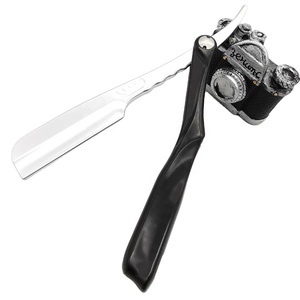
| Japanese 440C High-Carbon Stainless | 60 - 62 HRC | Platinum Sputtered + Teflon | Superior Anti-Rust | Professional Barber Straight Razors |
| Solid Forged Brass (Handles) | Vickers 150 HV | PVD Electroplated / Matte Chrome | Impenetrable Corrosion Shield | Luxury Heavyweight Traditional Safety Razors |
| Anodized Aircraft Aluminum | Vickers 120 HV | Hard Anodized Color Coatings | High Oxidation Protection | Ergonomic Women's Refillable Handles |
| Eco-Friendly Wheat-Straw Composite | N/A (Polymer) | N/A (Biodegradable Compound) | Water Resistant | Zero-Waste Eco Disposable Razors |
The OEM/ODM Product Co-Development Workflow
Executing a successful private-label razor project requires a structured engineering roadmap from initial CAD conceptualization to international export shipping. Espak International operates a transparent 5-stage manufacturing cycle that ensures custom requests are turned into production-ready products without quality loss.
CAD & Engineering
3D modeling, weight balancing, ergonomic thumb-grip modeling, and blade-head tolerance specification.
Rapid Prototyping
CNC metal milling and 3D resin printing for physical sample evaluation and shaving tests prior to mass tooling.
Tooling & Molding
Precision metal injection molding (MIM) and plastic injection mold fabrication built for high-volume yield.
Sputtering & Assembly
Vacuum PVD plating, automated blade stacking, ultrasonic welding, and moisturizing strip application.
5-Stage QC & Delivery
Optical edge sharpness verification, tension testing, salt-spray anti-rust validation, and worldwide export shipping.
Future Trends in Global Hair Razor Procurement (2025–2030)
Procurement teams must align their supply chains with key macroeconomic and consumer shifts influencing the personal care market:
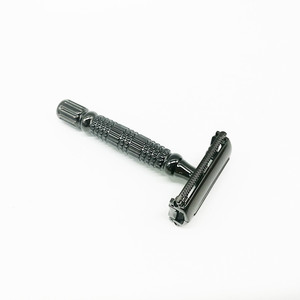
- The Resurgence of All-Metal Zero-Waste Safety Razors: Driven by plastic-reduction mandates across Europe and North America, eco-conscious consumers are moving back to classic brass and zinc-alloy double-edge razors. OEM buyers are prioritizing customizable knurling patterns and PVD colorways (Rose Gold, Matte Gunmetal, Rainbow Spectrum).
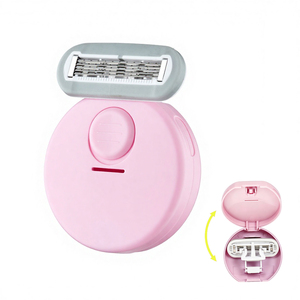
- Single-Blade Precision for Sensitive & Intimate Grooming: Multi-blade razors can cause ingrown hairs (pseudofolliculitis barbae) in sensitive areas. Modern ODM developments focus on single-blade guarded heads designed specifically for bikini lines, underarms, and pubic hair removal.
- Hybrid Wet/Dry Waterproof Electric Shavers: The boundary between manual razors and electric trimmers is blurring. Compact, IPX7 waterproof, Type-C rechargeable dual-head shavers are experiencing massive year-over-year growth among young, mobile demographics.
- Sustainable Polymer Composites: Post-consumer recycled (PCR) plastics and natural wheat-straw fiber handles are becoming standard requirements for global supermarket tenders and retail private labels.
Strategic Sourcing FAQ for B2B Procurement Managers
Where are your OEM/ODM hair razors manufactured, and what are your factory credentials?
Every razor and shaving tool in our catalog is produced in our integrated manufacturing facility located at 31-B, Jamia Masjid Road, S.I.E, Sialkot, Pakistan. Sialkot is internationally recognized as a premier surgical instrument and cutlery hub. Espak International has operated continuously since 1978, utilizing ISO-certified quality management standards that cover raw material forging, precision CNC grinding, automated assembly, electroplating, and strict final quality assurance without third-party subcontracting.
What customization options are available under your Private Label program?
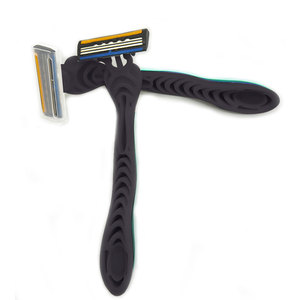
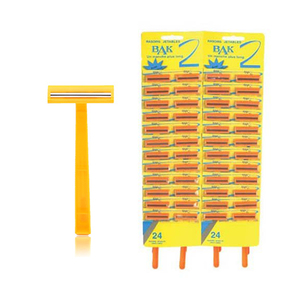
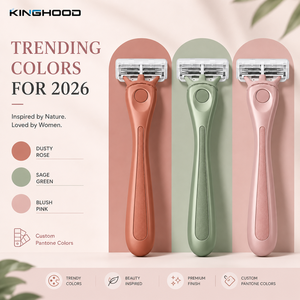
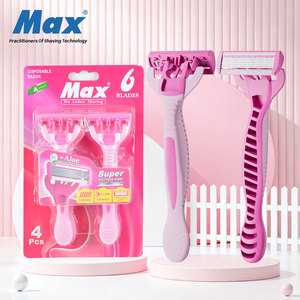
Our OEM/ODM services provide complete brand customization. For metal safety razors and barber razors, we offer laser logo engraving, custom handle knurling patterns, custom Pantone color matching via PVD coating or anodization, and specialized weight distribution. For disposable and cartridge razors, we offer custom handle colors, custom moisturizing strip formulations (e.g., Aloe, Vitamin E, Shea Butter), custom blade counts (2 to 6 blades), and tailored retail packaging (blister cards, eco-friendly Kraft boxes, travel pouches, and display cases).
How do you guarantee blade sharpness, edge consistency, and rust resistance?
We source raw stainless steel strip coil directly from accredited steel mills in Sweden (Sandvik 13C26) and Japan. Our manufacturing line incorporates multi-stage sharpening grinders monitored by laser optical measurement systems to verify bevel symmetry. Edges undergo vacuum sputtering with Chromium, Diamond-Like Carbon (DLC), and PTFE coatings to reduce friction and eliminate skin drag. Furthermore, every batch passes a 96-hour salt-spray corrosion chamber test and automated BESS sharpness scale testing prior to packaging.
What is your sample evaluation process, and what are your Minimum Order Quantities (MOQs)?
We encourage physical sample testing prior to committing to production runs. We ship pre-production samples directly to your headquarters so your product engineers can evaluate cutting performance, blade gap alignment, handle weight balance, and finish quality. We maintain flexible MOQ structures: established standard items can start at lower MOQs (e.g., 500 – 1,000 units), while fully custom ODM molded plastic cartridges or custom-tooled handles vary depending on tooling requirements.
How do you manage international shipping, customs documentation, and delivery timelines?
Espak International exports directly to buyers in over 85 countries across North America, Europe, the Middle East, Asia, and Latin America. Our dedicated export department handles full export documentation including Certificates of Origin (Form A/COO), Commercial Invoices, Packing Lists, Bill of Lading/Airway Bills, and SDS compliance certificates. We partner with leading sea freight lines and global air express carriers (DHL/FedEx/UPS) to ensure timely, insured, and tracked delivery to your designated port or warehouse.
Why should global buyers choose Espak International over competing trading companies?
Unlike trading intermediaries who markup prices and lack direct quality control, Espak International is a direct manufacturer. You work directly with factory engineers. This eliminated broker margins translate into competitive direct factory pricing, faster prototyping turnaround, direct oversight over ISO quality control, complete transparency regarding raw material origins, and immediate responsiveness to design adjustments or custom brand specifications.
The Espak International Advantage
Four decades of surgical-grade craftsmanship adapted for high-capacity global razor supply chains.
100% In-House Facility
Raw steel forging, stamping, CNC machining, PVD electroplating, blade sharpening, and assembly conducted entirely inside our Sialkot factory.
Strict 5-Stage QC Protocols
Every razor unit passes raw material inspection, dimension verification, edge sharpness testing, plating adhesion checks, and final pre-pack audit.
Rapid RFQ Response (<24 hrs)
Our multilingual B2B export desk processes technical specifications, custom quotes, and sample requests within 24 business hours.