Technical Whitepaper: Precision Engineering in Bandage & Medical Scissors Manufacturing
In global healthcare procurement, clinical care, emergency response, and professional grooming sectors, the distinction between standard cutting tools and surgical-grade shears lies in metallurgical integrity, blade micro-geometry, and tension calibration. As a leading manufacturer based in Sialkot, Pakistan—the historic center of international surgical instrument cutlery—Espak International provides an in-depth operational blueprint evaluating how premium bandage scissors and precision facial shears are forged, heat-treated, ground, and verified for heavy-duty B2B procurement applications.
Technical Key Takeaway for Procurement Officers
Surgical bandage scissors (such as Lister and Utility shears) require a minimum Rockwell Hardness rating of 52 to 58 HRC coupled with passive chrome-oxide layer passivating to withstand repeated autoclave sterilization without edge rounding, micro-pitting, or joint tension degradation.
1. Metallurgy & Material Science Standards for Medical Shears
The operational longevity of surgical and bandage scissors hinges entirely upon raw material selection. Medical procurement guidelines specify distinct grades of stainless steel depending on clinical exposure and mechanical load stress:
- AISI 420J2 Martensitic Stainless Steel: The industry baseline for standard Lister bandage scissors and trauma shears. High chromium content (12–14%) offers exceptional corrosion resistance alongside moderate hardness following vacuum heat treatment.
- AISI 440C High-Carbon Stainless Steel: Specified for premium surgical operating scissors and high-end barber/grooming shears. Delivers superior wear resistance and a higher Rockwell hardness (up to 58 HRC), retaining razor-sharp micro-edges over extended high-volume cut cycles.
- AISI 304 Austenitic Stainless Steel: Preferred for non-cutting structural components, handles, and low-friction tension rivets due to its non-magnetic profile and high ductility.
| Specification Parameter |
Bandage / Trauma Shears |
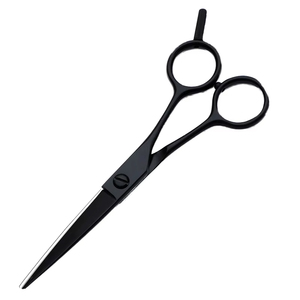
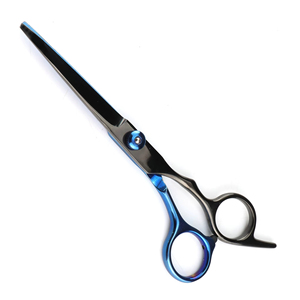
Barber & Grooming Scissors |
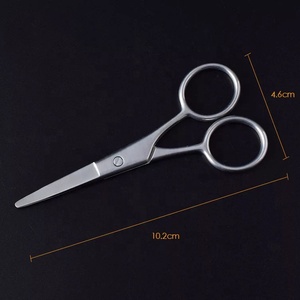
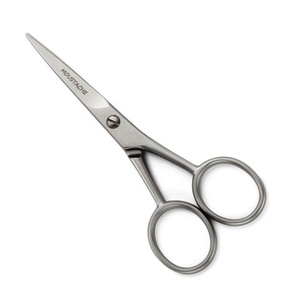
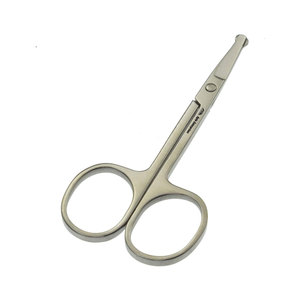
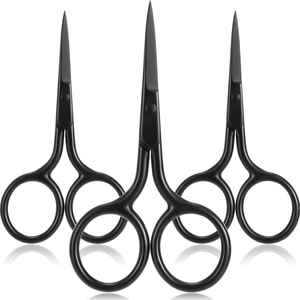
Mini Beauty & Facial Scissors |
| Steel Grade |
AISI 420 / AISI 440C |
AISI 440C / Japanese Stainless |
AISI 420J2 Stainless |
| Hardness Rating (HRC) |
54 – 58 HRC |
56 – 60 HRC |
52 – 55 HRC |
| Autoclave Compatibility |
134°C / 273°F (Steam Sterilizable) |
Alcohol & UV Sanitization |
Standard Chemical & UV Sterilization |
| Blade Tip Geometry |
Offset Probe / Probe-Blunt Safety Tip |
Pointed Straight / Beveled Edge |
Safety Round / Fine Curved Tip |
| Surface Finishing |
Satin Matte / PVD Black Coating |
Mirror Polish / PVD Titanium Nitride |
Satin Finish / Powder Coated |
2. Anatomic Blade Geometry and Mechanical Design Innovations
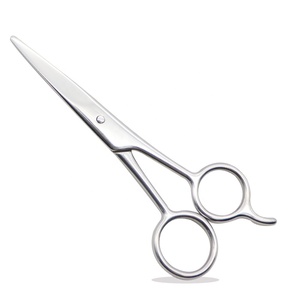
The structural efficiency of bandage scissors relies on specialized ergonomic offset geometry. Unlike symmetry-driven stationery scissors, medical bandage scissors feature a angled lower blade terminating in a rounded, flattened probe button tip. This design provides three essential functional benefits during rapid emergency triage and clinical dress removals:
- Tissue Protection Protocol: The flat, smooth probe tip glides smoothly beneath tight skin-adherent bandages, casting tapes, or heavy clothing without gouging the patient’s underlying dermis.
- Fulcrum Leverage Enhancement: An angled handle shank shifts the user's hand away from the cut path, delivering up to 35% higher mechanical advantage when severing dense textiles, woven fiberglass splints, or multi-layered compression wraps.
- Micro-Serrated Edge Retention: Modern medical shears incorporate micro-serrations along one cutting blade. These microscopic teeth grip slippery synthetic polymers and tough gauze fibers, preventing material slip during high-pressure cutting strokes.
Precision Forging
Hot drop-forged steel dies eliminate internal material voids, ensuring structural rigidity during high-torque cutting operations.
Custom OEM Branding
Laser-engraved logos, custom SKU etching, private label packaging, and bespoke color PVD coatings built to distributor specs.
5-Stage Quality Assurance
Every production lot undergoes rigorous tension alignment, sharpness calibration, corrosion testing, and visual flaw verification.
Future Procurement Trends in Medical & Beauty Scissors Supply Chains (2025–2030)
As global medical distribution channels and direct-to-consumer beauty brands adapt to evolving market demands, B2B sourcing strategies for cutting instruments are experiencing several key technological and supply chain shifts:
A. Adoption of Physical Vapor Deposition (PVD) Coatings
Traditional chrome plating is rapidly being superseded by advanced PVD thin-film ceramic coatings (such as Titanium Nitride [TiN], Titanium Carbonitride [TiCN], and Diamond-Like Carbon [DLC]). In both clinical bandage shears and premium beard/grooming scissors, PVD technology provides a non-reactive, scratch-resistant surface barrier that significantly improves corrosion resistance against aggressive chemical sterilants while reducing surface friction by up to 40%.
B. Supply Chain Consolidation & Factory-Direct Manufacturing Partnerships
To reduce procurement overhead and eliminate intermediary markup, global distributors in over 85 countries are standardizing their vendor rosters by partnering directly with vertically integrated OEM/ODM factories. Facilities equipped with in-house forging, heat treatment, CNC grinding, and automated polishing—such as Espak International's manufacturing complex in Sialkot—allow buyers to maintain strict quality control while ensuring stable lead times and aggressive volume pricing.
C. Ergonomic Micro-Adaptations and Anti-Fatigue Engineering
With clinical staff experiencing increasing rates of repetitive strain injuries (RSI) during long shifts, the industry is transitioning toward lightweight hybrid designs. Incorporating drop-forged stainless blades into lightweight, heat-resistant glass-filled nylon handles allows trauma shears to cut through tough leather and seatbelts while reducing total instrument weight by up to 30%.
The Espak International Manufacturing Advantage
Established in 1978 in Sialkot, Pakistan, Espak International has expanded from a specialized cutlery workshop into a premier global manufacturer of medical instruments, beauty scissors, tweezers, and manicure tools. Operating under strict ISO compliance standards, our facility handles every production phase under one roof:
- Raw Material Verification: Every batch of incoming steel undergoes chemical spectrographic analysis to verify chromium, carbon, and nickel ratios prior to processing.
- Precision Drop Forging: Advanced forging presses shape raw steel billets under extreme pressure, producing dense grain structures that resist flexing during operation.
- Hand-Honed Alignment: Master craftsmen meticulously hand-fit each pivot screw and hand-hone blade cutting edges to achieve zero-drag tension across the full length of the blade.
- Export Ready Documentation: Fully compliant with global trade standards, providing complete Certificate of Origin (COO), ISO certifications, material safety data sheets, and custom packaging support.
Need Custom OEM Manufacturing or Bulk Wholesale Quotes?
Connect with our technical export engineering team today. Receive comprehensive product catalogs, custom pricing tiers, and physical production samples within 24 hours.
Get Catalog
Frequently Asked Questions (FAQ) for Bulk Procurement
Where are Espak beauty and surgical instruments manufactured?
+
Every instrument in our catalog is produced in our own dedicated manufacturing plant located at 31-B, Jamia Masjid Road, S.I.E, Sialkot, Pakistan. Sialkot is internationally recognized as the world's premier manufacturing hub for surgical instruments and high-precision cutlery. Operating in-house since 1978 ensures complete oversight of forging, heat treatment, grinding, polishing, and quality inspection.
What steel grades are used for your bandage and grooming scissors?
+
We primarily utilize high-grade surgical stainless steels, including AISI 420J2 for standard medical scissors and high-carbon AISI 440C or Japanese SUS440 steel for high-end professional barber and personal care shears. Material certifications and spectrographic lab reports can be provided upon request for high-volume contract orders.
Do you offer OEM, ODM, and Private Labeling services?
+
Yes. Over 70% of our production volume is dedicated to OEM and private label clients. We support precision laser logo engraving, custom pivot screw designs, bespoke PVD color finishes (gold, matte black, rainbow titanium), and customized retail blister cards, pouch sets, or magnetic gift boxes tailored to your brand specifications.
How can global buyers request physical samples before placing bulk orders?
+
We encourage evaluation samples prior to full production commitments. You can request physical sample kits by contacting our sales team. Samples allow your quality assurance team to evaluate cutting tension, tip alignment, steel hardness, and surface finishing firsthand.
What is your factory's production capacity and export lead time?
+
Our ISO-certified manufacturing facility produces approximately 20,000 precision pieces per month. Standard production lead times range from 20 to 35 days depending on order complexity and custom branding requirements. Express air freight and sea freight options with full export documentation are available to over 85 countries worldwide.
What information should be included in an RFQ for fast quotation response?
+
To receive a detailed formal quotation within 24 hours, please include: item SKU codes or product descriptions, estimated quantity per item, preferred steel grade or finish (e.g., satin, mirror, PVD black), custom branding requirements, target packaging formats, and the destination country for shipping logistics calculation.